Ch. 25
2 of 1 ·Can and cannot
Lesson 2 · AI Explorer
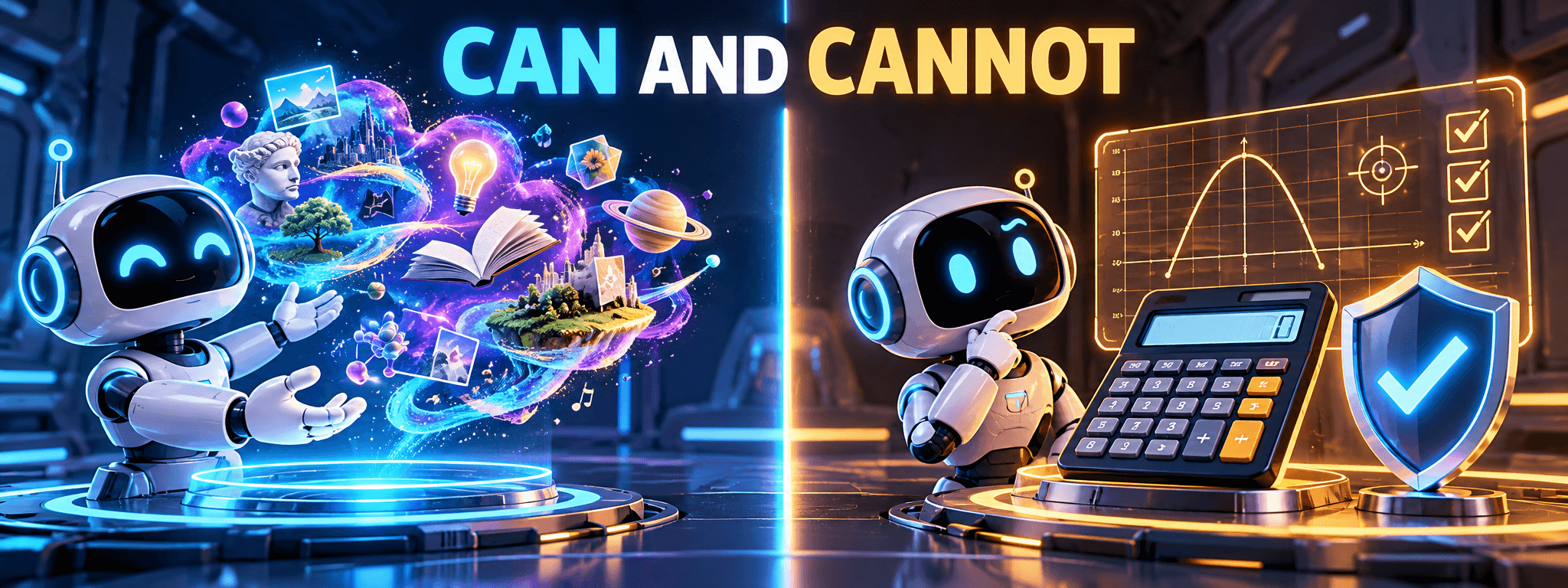
Can and cannot
The limits of AI.
Easy~20 minFree preview
Chapter help
What Is AI?
Some AI systems learn patterns from examples to make predictions. A photo sorter may guess whether a picture shows a cat. Its guess can be wrong; ask what evidence would help check it.
Concept
Good at fuzzy, bad at exact
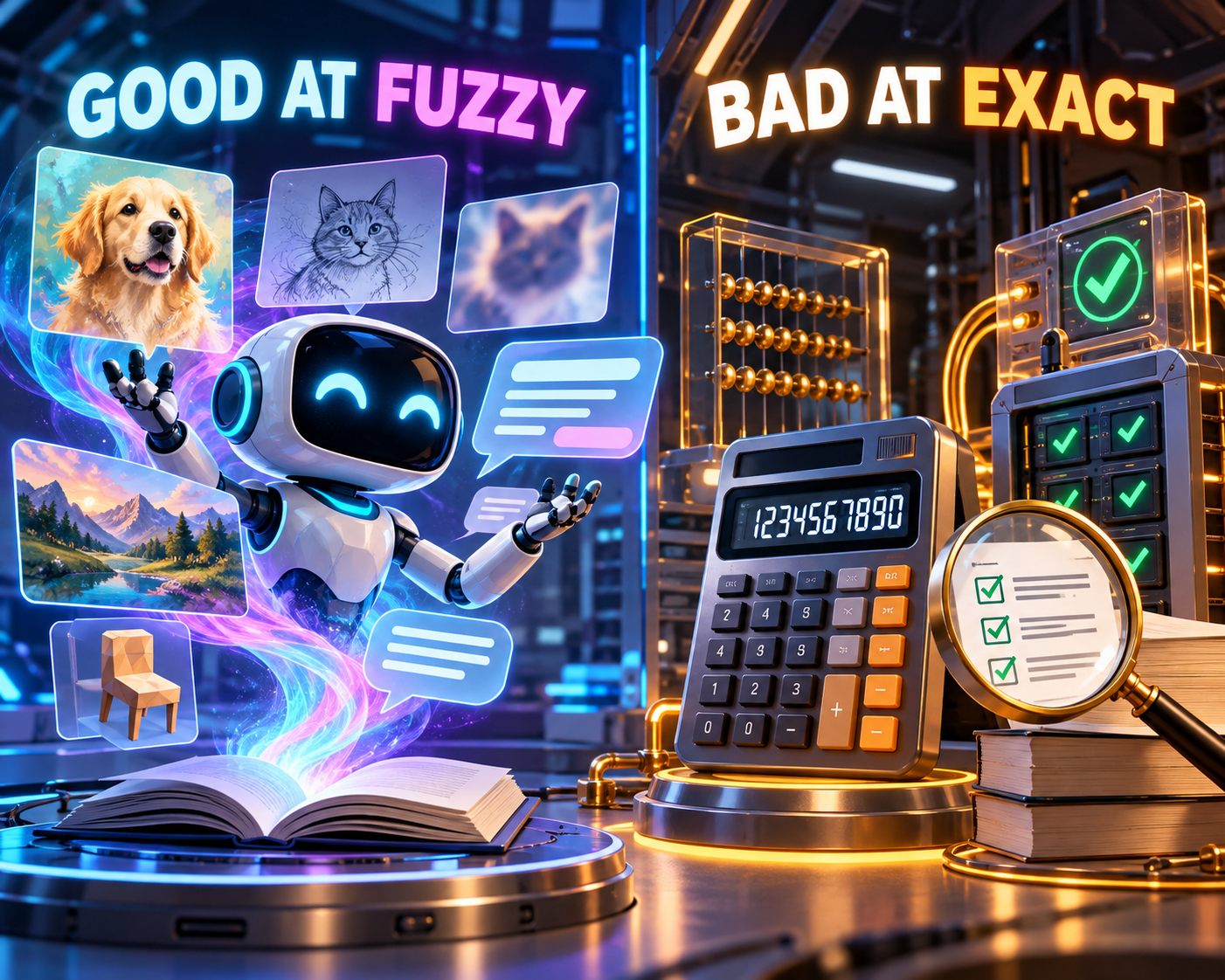 Click to zoomGood at fuzzy, bad at exact
AI's strengths and weaknesses are almost the mirror image of your Python programs.
AI is strong at things with no exact answer — recognising a face, suggesting a video, summarising an essay, translating a sentence, spotting a pattern in huge amounts of data.
AI is weak at things needing exactness — precise arithmetic, guaranteeing a fact is true, explaining why it gave an answer, staying identical between runs.
Your calculator is better at arithmetic than the most advanced AI ever built. That is not a joke.