Ch. 27
2 of 1 ·Improving a prompt

Lesson 2 · AI Explorer
Improving a prompt
From vague to precise.
Easy~25 minFree preview
Chapter help
Prompting Basics
A prompt tells an AI what help you want. Try: Give three story ideas for Class 6, each in one sentence. Name the task, reader and format, then check the result.
Concept
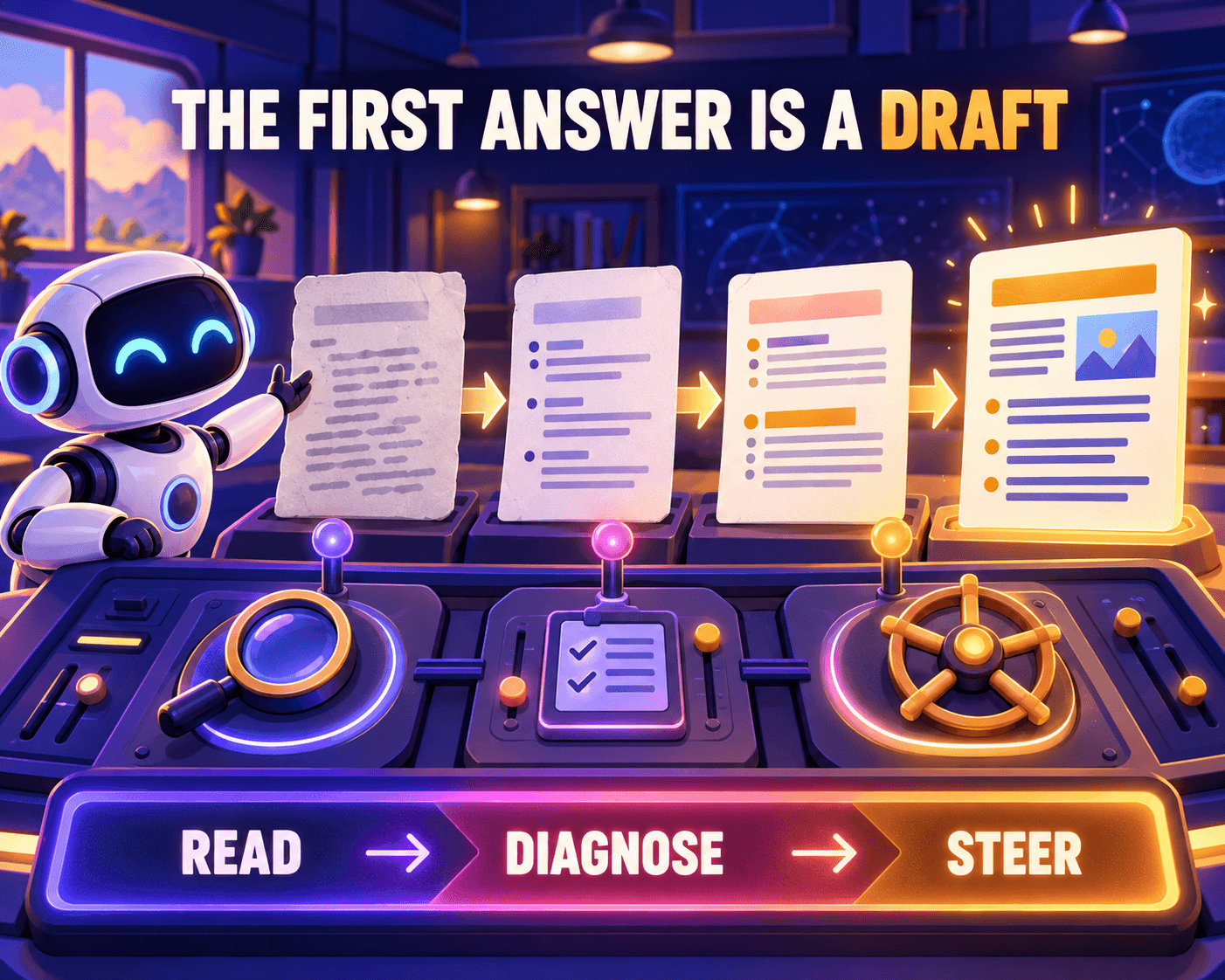
The first answer is a draft
 Click to zoomThe first answer is a draft
Beginners treat the first response as the finished result — accept it or start over.
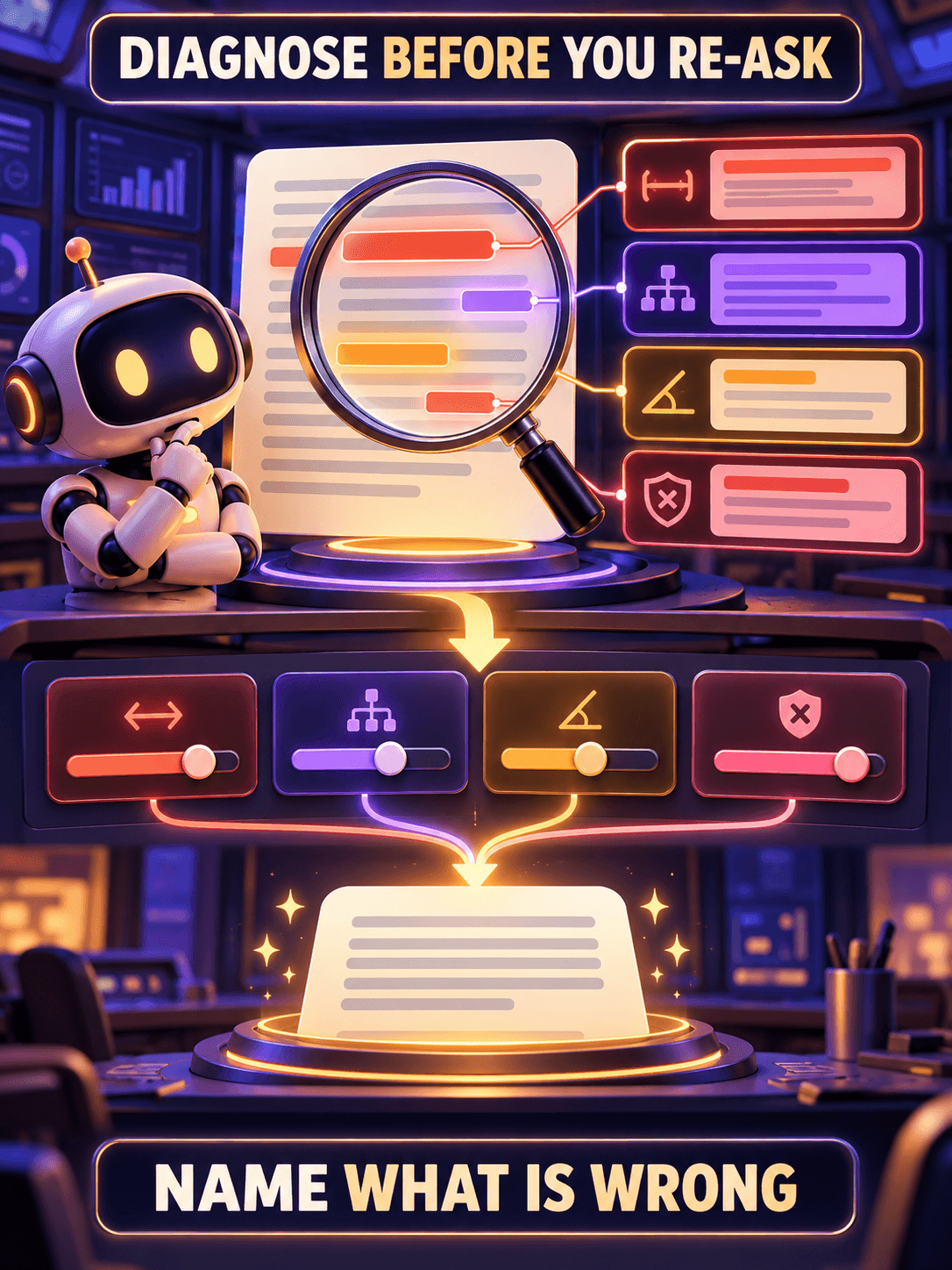
That's like accepting the first draft of an essay. The real skill is steering: reading what came back, working out what's wrong with it, and asking for a specific change.
"Shorter, and drop the third point." "Use an example from cricket instead." "That's too formal — write it like you're explaining to a friend."
Each round gets closer. This is iteration, which you've done all year with animation timings, game balance and CSS values.