Ch. 6
3 of 1 ·Fix and improve
Lesson 3 · Computational Thinking
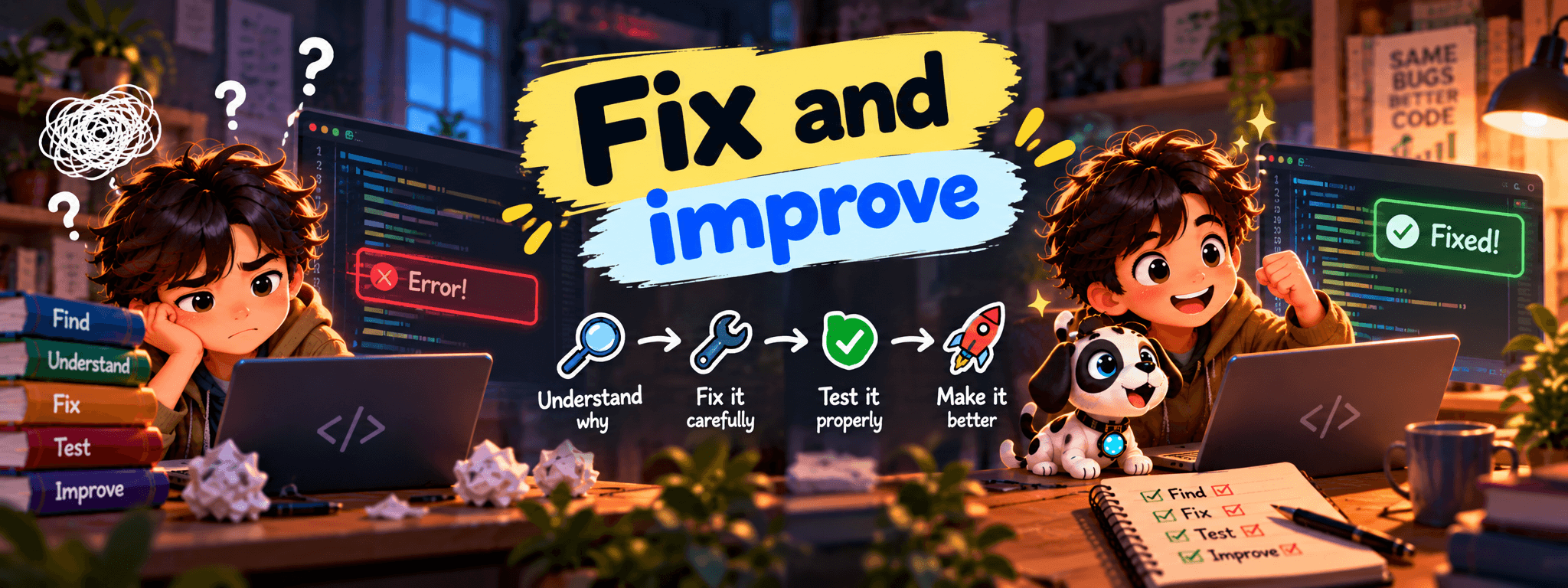
Fix and improve
Repairing and making it better.
Easy~20 minFree preview
Chapter help
Debugging Detective
A bug makes instructions produce the wrong result. Write what you expected, compare what happened, and change one step. Run the same example again to check your fix.
Concept
Finding it is only half the job
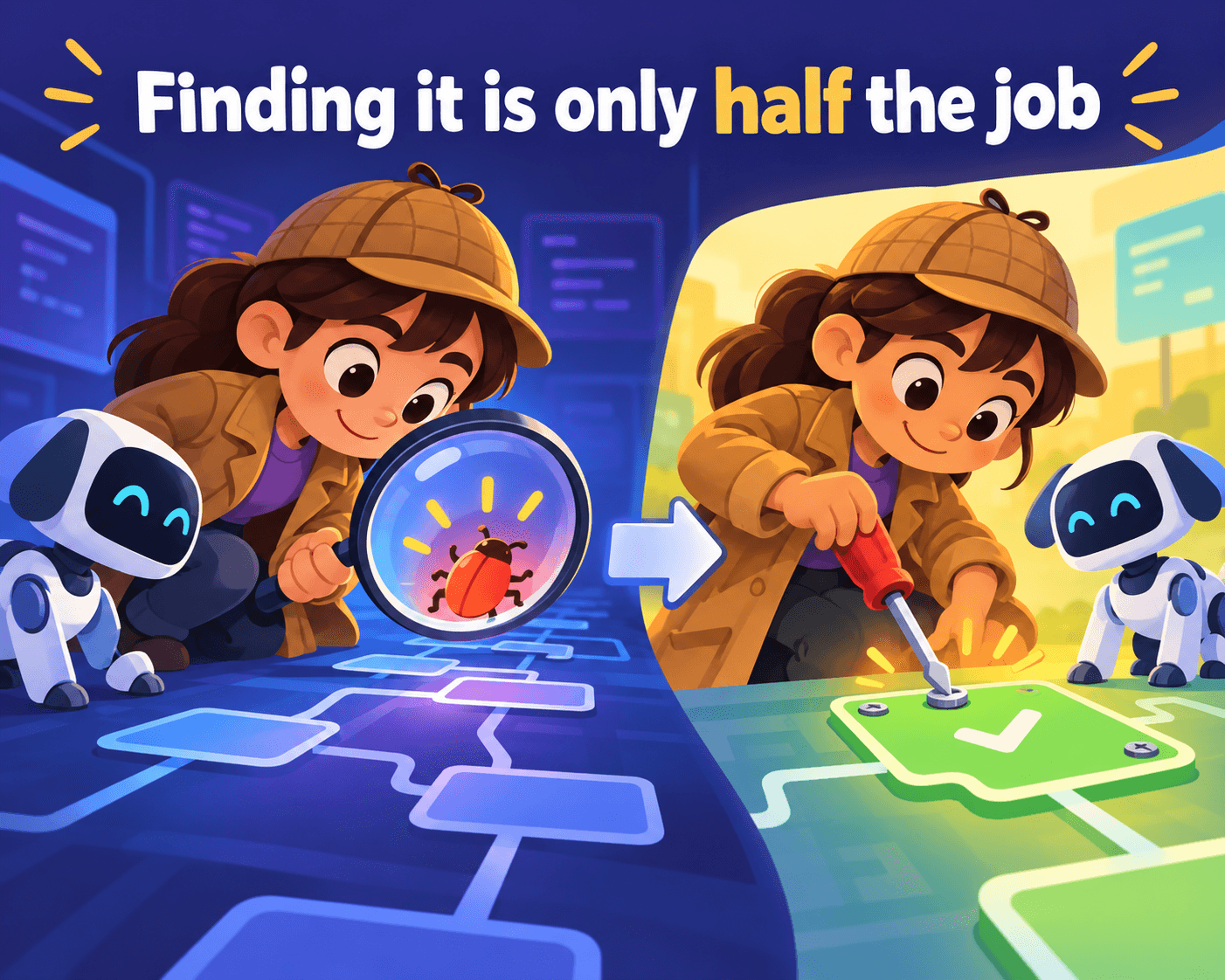 Click to zoomFinding it is only half the job
You've located the bug. Now comes the part people rush — and rushing here creates new bugs.
A proper fix has three parts:
- Understand why it was wrong, not just where
- Change it, one thing at a time
- Test that it's fixed — and that nothing else broke
That third point is the one beginners skip. Fixing one thing and quietly breaking two others is the most common way programs fall apart.